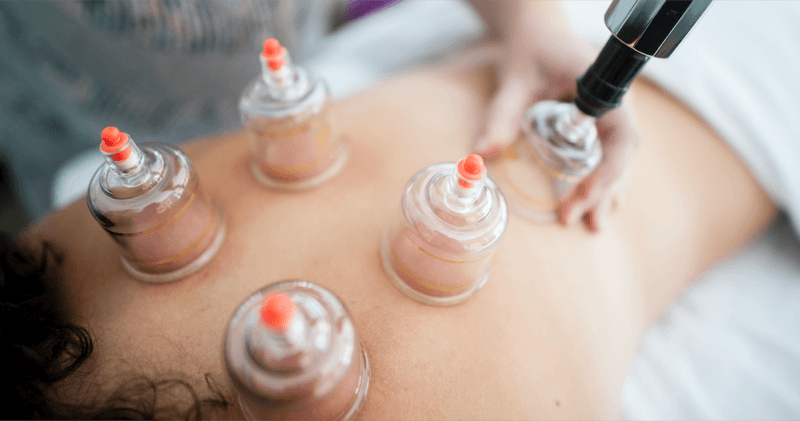
Cupping therapy at JointWorks PT uses special cups to create suction on the skin. That pull draws blood to the area and changes how the tissue loads, and most people find the area moves more freely straight afterward.
Dr. Steven Lagasse uses both static cupping (cups stay in place) and dynamic cupping (cups glide across the skin) depending on what your body needs. This targeted approach helps with pain, muscle tension, and restricted movement.
At JointWorks PT, cupping isn't a standalone service. It's woven into your full treatment plan. Dr. Lagasse pairs it with rehab exercises, movement training, and other hands-on techniques during your one-on-one sessions for the best results.
Benefits of Cupping Therapy
- More blood flow to the treated area
- Less muscle tension and pain, usually right away
- Better soft tissue mobility
- Movement that stretching alone has not freed up
- Easier movement you can build real work on
- Used alongside hands-on therapy and exercise, never on its own
Frequently Asked Questions
Suction cups create a gentle pull on the skin, lifting the tissue underneath. That draws blood to the area and puts the tissue under a kind of load it does not normally see, which is the opposite of what pressing down does. What people notice is that the area moves more freely right afterward, and Dr. Lagasse uses that easier movement to get real work done in the same visit.
It helps with pain relief, muscle recovery, flexibility, and relaxation. It also loosens tightness, improves blood flow, and supports tissue health. Where it earns its place is opening up movement that stretching alone has not shifted. The effect on tight tissue can also improve your range of motion and how well you move.
Yes, temporary circular marks may show up from the increased blood flow. They usually fade within a few days and aren't bruises. They're a normal response showing where tightness was. A darker mark is not a sign the treatment worked better, whatever you may have been told. Dr. Lagasse will explain what to expect and can adjust the intensity based on your comfort.
Athletes, people with chronic pain, and those recovering from muscle injuries often find relief with cupping. It's especially helpful for back and neck pain, shoulder problems, IT band issues, and general muscle tightness. If you carry a lot of stress, the relaxation side of cupping can help too. Dr. Lagasse will let you know if cupping is a good fit during your evaluation.
Most patients describe cupping as a strong pulling sensation rather than pain. The intensity can be adjusted based on your comfort level and tolerance. Some areas may be more sensitive than others, but the sensation typically becomes more comfortable as tissues relax. After treatment, you may feel immediate relief from previous pain and tension in the treated area.
That depends on what is causing it, which is exactly what the free consultation is for. Cupping works well for some things and not for others, and Dr. Lagasse will tell you straight which category you are in. If cups are the right call, you will get them. If something else will work better, you will hear that instead, along with what he recommends and why. Either way you leave with a clear answer about your own problem, which is more than most people get.
Absolutely. At JointWorks PT, cupping is often used alongside rehab exercises, joint mobilization, and dry needling for well-rounded care. Dr. Lagasse builds treatment plans that go after the root cause, not just the symptoms. The hour-long, one-on-one sessions leave plenty of time to use multiple techniques together.
What Our Patients Say

Working with Steven was such a positive experience! He was incredibly responsive when I first contacted him about a knee injury; he saw me within just a couple days of my accident. I felt extremely supported the entire time we worked together. Due to his expertise and care, I was back to normal activities within a couple weeks of beginning my treatment program! I highly recommend!